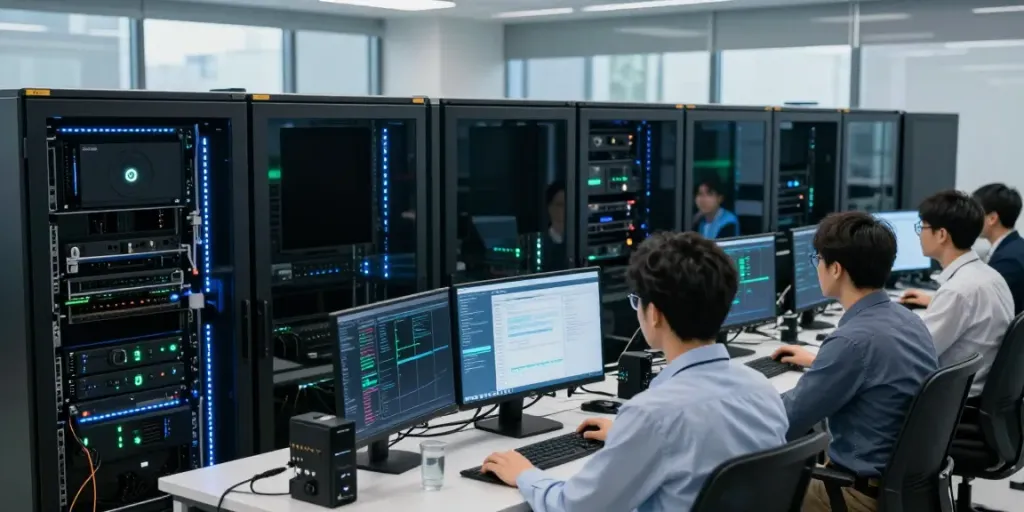
Understanding AI Infrastructure: A Foundation for Success
The landscape of artificial intelligence (AI) is evolving rapidly, presenting new challenges and opportunities for enterprises that intend to harness its power. At the core of this advancement is a robust and efficient AI infrastructure—a system comprising the hardware, software, and connectivity necessary to deploy and manage AI applications effectively. This article delves into the various components of AI infrastructure, the role of power in the AI Token Economy, and practical insights for organizations looking to leverage AI solutions for competitive advantage.
What is AI Infrastructure?
AI infrastructure refers to the integrated framework that supports AI workloads. It encompasses a variety of components, including high-performance computing (HPC) resources, storage solutions, networking capabilities, and AI-specific software such as machine learning frameworks and development tools. In essence, it is the backbone that allows organizations to perform complex computations required for AI applications, including data processing, model training, and inference.
Components of Effective AI Infrastructure
- Hardware: This includes GPUs and TPUs, which are designed to handle the high throughput required for processing vast amounts of data.
- Software: AI frameworks such as TensorFlow and PyTorch enable developers to build and deploy models efficiently.
- Networking: High-speed networks are essential for transferring large datasets and ensuring low-latency access to cloud resources.
- Data Storage: Solutions like object storage and SQL databases are critical to managing the data lifecycle from collection to deployment.
The Role of Token-Metered Services in AI Infrastructure
Token-metered services offer a transparent and efficient way to measure AI usage through computational billing and processing units. These tokens track how resources are allocated during AI operations, enabling organizations to optimize their infrastructure and manage costs effectively. This model also supports the AI Token Economy, where users can participate financially, ensuring a sustainable funding mechanism for AI projects.
Why Power is Essential to the AI Token Economy
The relationship between power and AI operations is fundamental. Without reliable and adequate power supply, the potential of AI infrastructure cannot be fully realized. Power is crucial for high-density computing environments, where GPUs demand significant energy resources during peak workloads. Understanding this relationship is vital for stakeholders aiming to participate in the AI Token Economy.
The Connection Between Power Resources and AI Operations
AI factories depend on continuous and reliable power sources to function optimally. The integration of power resources with AI operations not only enhances performance but also increases the efficiency of resource utilization. By linking these two elements, organizations can leverage their infrastructure to meet the fluctuating demands of AI workloads while minimizing waste.
Impact of Power Availability on Performance
Power availability directly affects the performance of AI applications. Any power disruption can lead to significant downtime and loss of productivity. Ensuring a steady power supply improves computational reliability, allowing for smoother operations and better performance in AI tasks. Moreover, innovative power management strategies can help in scaling resources according to demand, thus optimizing infrastructure costs.
Global Trends in AI Infrastructure Power Needs
As organizations increasingly adopt AI technologies, the demand for power is projected to surge. This trend compels enterprises to consider alternative power sources, including renewable energy, to meet their growing power needs sustainably. Furthermore, the trend towards decentralized power resources and energy efficiency technologies offers exciting prospects for managing AI infrastructure more effectively.
Choosing the Right AI Infrastructure Power Plan
Deciding on an AI infrastructure power plan is crucial for businesses looking to engage in the AI Token Economy. The choice of plan influences not only performance but also costs and potential rewards. Organizations must evaluate their specific needs, budget constraints, and operational goals while selecting an appropriate power plan.
Types of Power Plans Available for Participants
There are various power plans designed to cater to different operational requirements. These include:
- Core Power Access: Basic access to necessary power resources.
- Enhanced Power Access: Additional resources for organizations with moderate to high AI workloads.
- Advanced Power Access: Maximum power supply for enterprises with demanding AI operational needs.
How to Evaluate Your Power Needs and Options
Organizations should perform a thorough assessment of their current and projected power needs. Factors to consider include workload size, processing requirements, and peak demand periods. Utilizing tools that track power consumption and performance metrics can provide valuable insights that guide the selection of the most suitable power plan.
Case Studies: Successful Implementation of Power Plans
Several organizations have successfully implemented tailored power plans to enhance their AI infrastructure. For example, a major retail company adopted an advanced power plan that allowed them to process AI-driven analytics in real-time, leading to improved inventory management and customer engagement. Similarly, tech startups leveraging enhanced power access facilitated rapid model training and deployment, accelerating their time-to-market.
Measuring Your Contribution in the AI Token Economy
Understanding how to measure and track contributions in the AI Token Economy is essential for maximizing the benefits of participation. Organizations can leverage various metrics to assess their impact and effectiveness within the ecosystem.
Understanding Contribution Metrics and Rewards
Rewards in the AI Token Economy are calculated based on several factors, including power contributions, resource utilization, and overall performance in AI workloads. Organizations should familiarize themselves with the metrics used in their selected power plan to better understand how these factors influence their rewards.
Tools for Tracking Performance in AI Infrastructure
Implementing performance tracking tools allows organizations to monitor their power usage and AI workload processing efficiently. These tools can help identify areas for improvement and provide insights into optimizing resource allocation based on actual performance data.
Best Practices for Maximizing Your Contribution
To maximize contributions to the AI Token Economy, organizations should consider the following best practices:
- Regularly assess and adjust power plans based on changing operational needs.
- Utilize performance tracking tools to analyze usage data and optimize resource allocation.
- Engage with the broader AI community to share insights and learn from others.
The Future of AI Infrastructure and Emerging Trends
The future of AI infrastructure holds significant promise, with emerging trends poised to reshape the way organizations engage with AI technologies. Staying informed about these trends is vital for stakeholders aiming to maintain a competitive edge.
Innovations to Watch in AI Infrastructure Development
Key innovations expected to impact AI infrastructure include the advent of low-power AI chips, advancements in quantum computing, and the proliferation of edge computing. These technologies are set to enhance the efficiency and capability of AI systems while reducing energy consumption.
Predictions for AI Infrastructure in 2026 and Beyond
By 2026, it is anticipated that AI infrastructure will become even more integrated with various technologies, including IoT and 5G. This convergence will enable unprecedented levels of data processing and AI model deployment, further driving the AI Token Economy.
How to Stay Ahead in the Evolving AI Landscape
Organizations aiming to stay ahead in the rapidly evolving AI landscape should prioritize continuous learning and adaptation. Engaging in partnerships, participating in broader AI ecosystems, and investing in training for staff on emerging technologies will be critical strategies to ensure ongoing success.
What is AI infrastructure?
AI infrastructure provides the necessary framework for deploying AI applications effectively, encompassing hardware, software, networking, and data management solutions.
What are the top 5 AI infrastructure companies?
Several companies lead the AI infrastructure sector, including NVIDIA, IBM, Google Cloud, Microsoft Azure, and AWS, each offering unique solutions tailored to diverse business needs.
What are the 5 levels of AI infrastructure?
The five levels of AI infrastructure can be categorized as follows: Basic, Intermediate, Advanced, Professional, and Enterprise, with each level offering varying resources and capabilities to meet distinct operational requirements.
Which 3 jobs will survive AI?
Despite the rise of AI, several jobs are projected to remain resilient, including AI ethics specialists, data scientists, and roles focused on AI training and oversight, as these positions require human insight and creativity.